Showing posts with label development. Show all posts

February 25, 2012

Peace Corps: For and Against


A year in.

Three hundred and sixty five passes of the sun; four cyclical seasons: rain, cold, dry, and then rain again; and other measurements: forests that have changed color week by week, the births and deaths in the village that occurred within this time frame, the endless iterations of sitting on my porch at the end of each completed day.

It's time for some evaluation. A halfway point summary, a review perhaps, of the organization under whose banner I labor.

I joined Peace Corps for the opportunity to live in a community I otherwise would never have known existed. I was motivated by the theory that to help people you must live with them, eat with them, learn their language, and involve yourself in their social situation. I was swayed by the image of the Peace Corps volunteer, knee deep in a ditch, helping the world.

November 6, 2011

Another brief update

Welcome, November. The year has progressed exceptionally fast, and I have found myself in the midst of a variety of projects. As much as this blog has become a gallery of journal entries, a behind the scenes and in between the lines of the pleasures and vulgarities of Peace Corps service, this is more of an update of what takes place on the main stage, what occupies my day. So more lucidity, less metaphor.

October 15, 2011

Kids


A popular question I get is: "How many are you?"

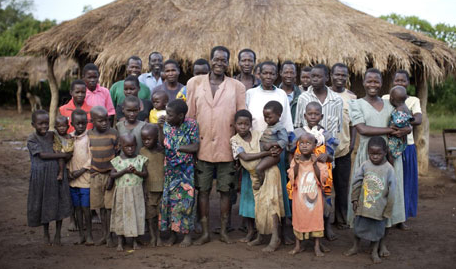
This is not directed nationally, as in how many musungus? But it is restrict to one's immediate family: I have two siblings, and together we are three, is my answer. I usually return the question, as I am learning to be less introverted. Often the answer is "We are just nine." Zambians have big families, even bigger as it is common to absorb orphans and relatives. But why the high birth rate?

China in Africa

This is a big discussion in Sub-Saharan Africa, particularly in Zambia: what's more preferable, Western nations which extend aid in the form of social programs and conditional loans, or China, which invests in business without the typical humanitarian strings attached. One is criticized as being economic parenting which is leading Africa to be depending on foreign aid; this is a view held by the Zambian economist Dambisa Moyo, author of Dead Aid. The criticism of the other is that China is exploiting Africa, a neo-colonist. This exchange between Asia and Africa is intended to benefit both, one with mined and farmed resources, the other with employment and infrastructure development. The railroad line, the Tanzana, near my house is Chinese built; Atlantic Monthly has an article on it. But Chinese business in Zambia is not without its disadvantages.

July 7, 2011

From the Economist, January 2011:
The emerging new country of South Sudan, which has voted overwhelmingly for secession from the north, has already become a leading nation of "the workshop": not a place where hard work gets done under duress but where the language of aid is taking hold even among the natives. 'I feel like a stakeholder now,' exclaimed a woman of the Dinka tribe, the region's most prolific.

All the favourite words of NGO-speak are now aired in the makeshift corridors and canteens of Juba, the fledgling capital. Top of the list are 'empowerment', 'capacity-building' and 'stakeholder' (not someone actually carrying a stake). 'Governance', 'civil society', 'facilitators' and 'disadvantaged' follow fast behind. British NGOs have a fondness for 'focal groups'. Americans like anything that leads to 'inclusion', especially of the 'excluded'.
All words I have become incredibly familiar with, then inured, whereafter sick of. Thanks, Economist, now I'll start delousing my vocabulary.